
Need help with fire and hazard detection?
Contact Us → Get a Quote →
DETECTION DEVICES
Air Sampling
Air sampling detection systems use a network of sampling pipes to draw air from multiple locations back to a central detection unit for analysis.
By actively transporting air to the detector, these systems provide consistent monitoring across the protected area, independent of airflow conditions.

Fire Defense installing VESDA air sampling smoke detection in a data center with ceiling sampling points for early warning smoke detection. 
VESDA air sampling smoke detection piping installed above a suspended ceiling for early warning smoke detection. 
VESDA air sampling smoke detection systems with addressable point detection installed by Fire Defense. 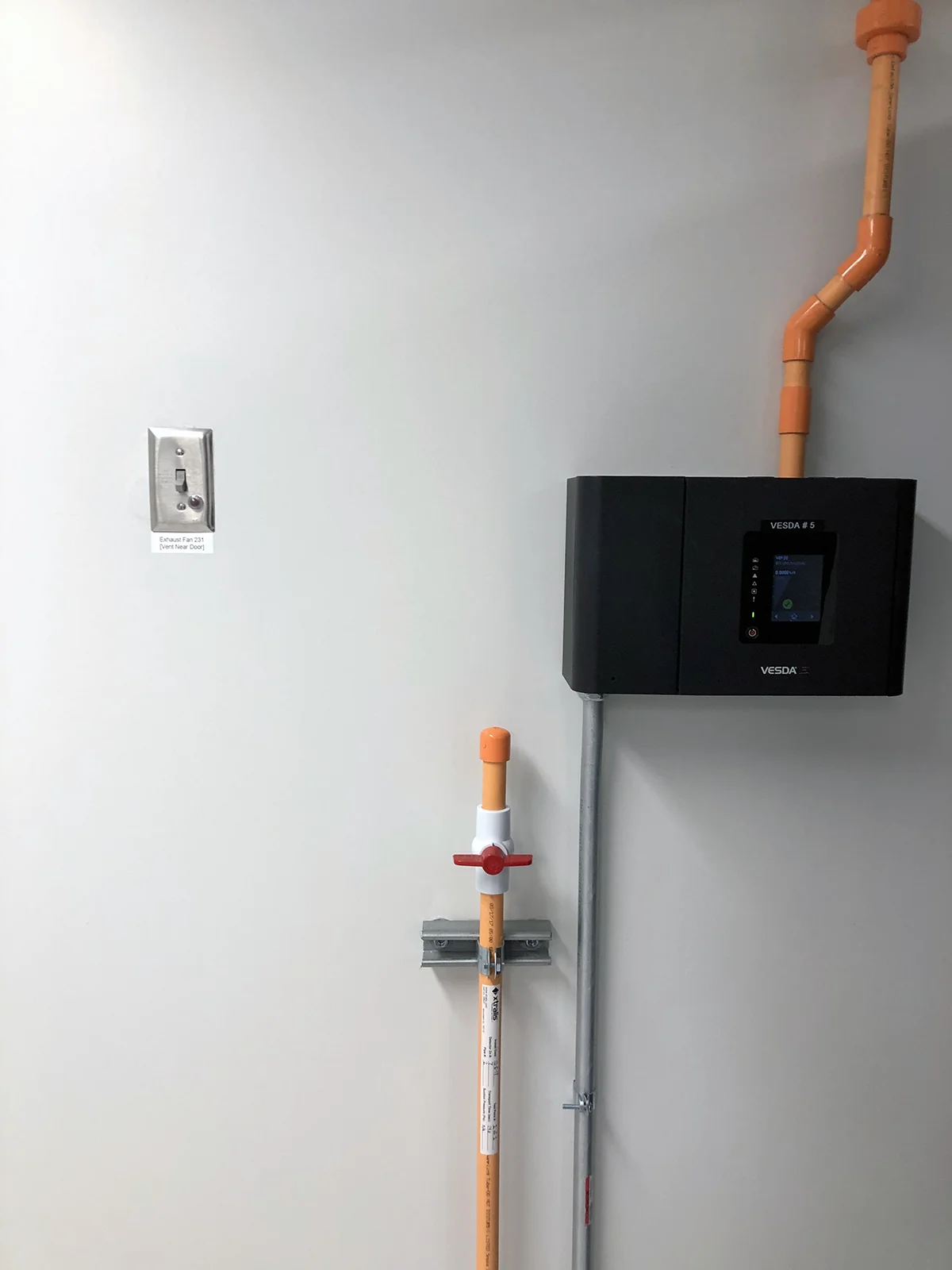
One of several VESDA air sampling smoke detectors installed by Fire Defense.
These systems can detect extremely low concentrations of smoke that may not be identified by conventional detection methods until fire conditions further develop.
Air sampling detection is commonly applied in clean, sensitive, or high-value environments where early detection is critical.
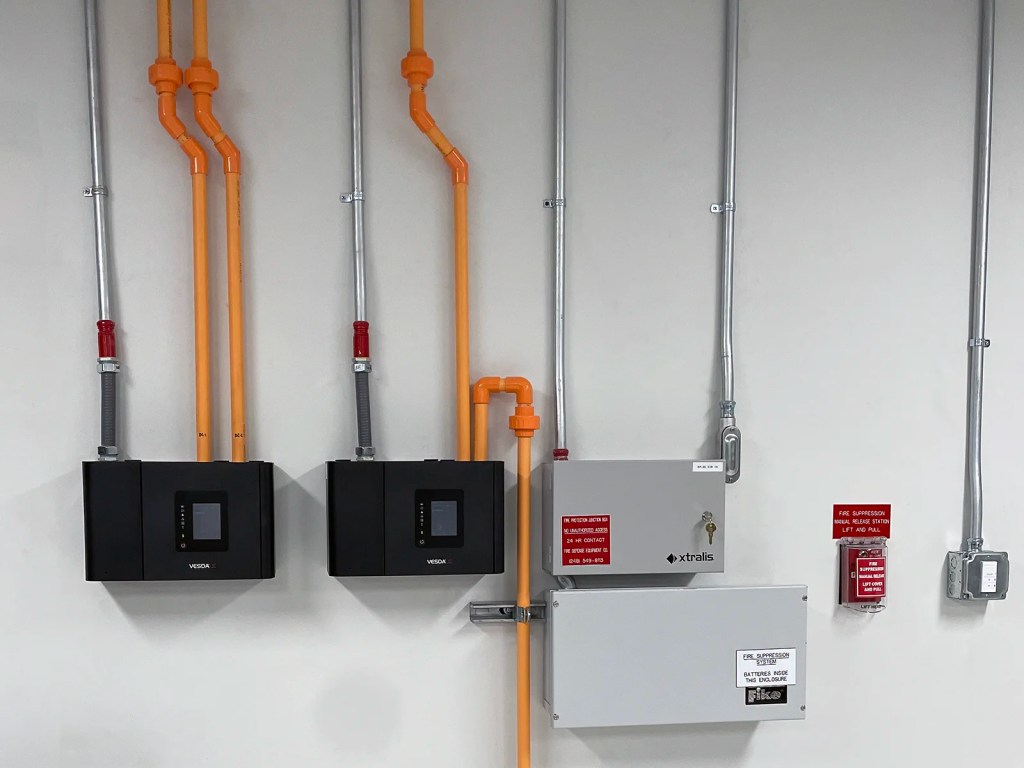
VESDA air sampling smoke detection integrated with a clean agent fire suppression system for early warning detection and automatic suppression system activation.
AIR SAMPLING APPLICATIONS
Clean rooms. Data centers. Edge and modular data centers. Electronic equipment rooms. Laboratories. Museums and galleries. Heritage buildings. Telecom rooms. UPS and battery rooms. Battery energy storage systems. In-cabinet and enclosure protection. Cable trays. In-duct (HVAC systems).
Design + Install
Fire Defense provides design and installation for air sampling detection systems used where very early warning is required. Systems draw air through a network of sampling pipes to a central detection unit, allowing detection at extremely low levels of smoke.
- Very Early Warning Aspirating Smoke Detection (VESDA) system design
- Sampling pipe network layout based on transport time and coverage
- Detector location and zoning for targeted response and alarm staging
- Interface with fire suppression and alarm systems for alarm and release functions
- Commissioning and customer orientation
Extinguishers are installed to ensure clear visibility and easy access based on the building layout, occupancy, and identified hazards. Electronic monitoring devices may also be installed to integrate extinguisher supervision with the building’s Fire Alarm System.
ITM
Inspection, testing, and maintenance services for air sampling detection systems to verify airflow, sensitivity, and system integrity.
- Annual testing of air sampling detection systems
- Sampling airflow and transport time verification
- Detector sensitivity and alarm threshold testing
- Inspection of sampling pipes, ports, and network integrity
- Verification of alarm, pre-alarm, and fault conditions
- Inspection documentation
Emergency Service
24/7 emergency service is available for air sampling detection systems. Fire Defense supports fault troubleshooting, airflow issues, detector replacement, and restoration of system operation using commonly stocked components.
Codes and Standards
Fire Defense performs air sampling detection system services in accordance with NFPA 72 and other applicable codes, manufacturer requirements, customer specifications, and AHJ requirements.
Note: NFPA makes its codes and standards available online for free. Select View Free Access under Current & Prior Editions and create a free account.
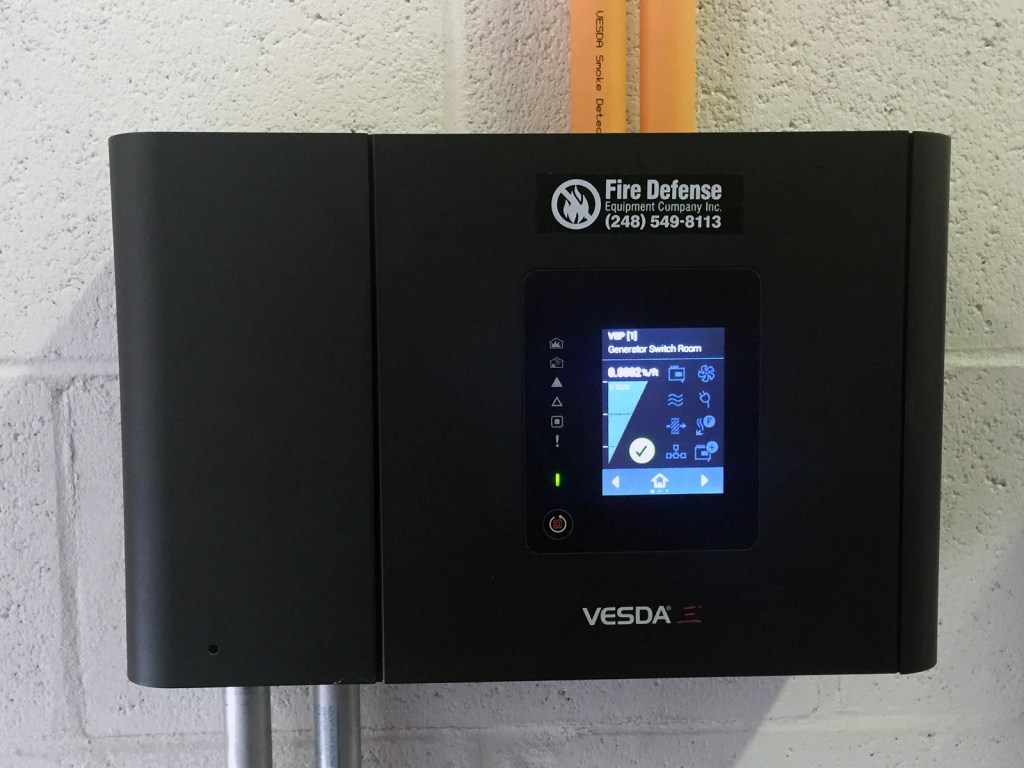
VESDA air sampling smoke detection installed by Fire Defense in a generator switch room for early warning smoke detection of critical electrical equipment.

VESDA air sampling smoke detection fittings, sampling points, pipe components, and spare parts stocked for inspection, testing, maintenance, repairs, and system modifications.
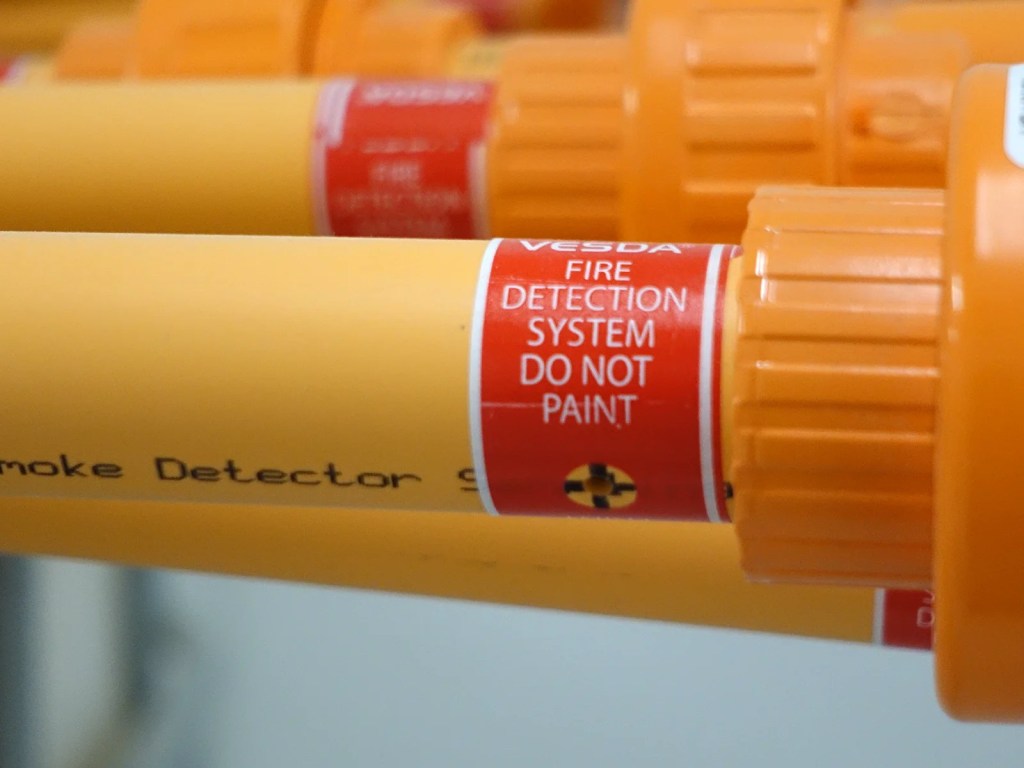
Detail of VESDA air sampling smoke detection piping and sampling network layout designed for controlled air transport and calibrated smoke detection response times.
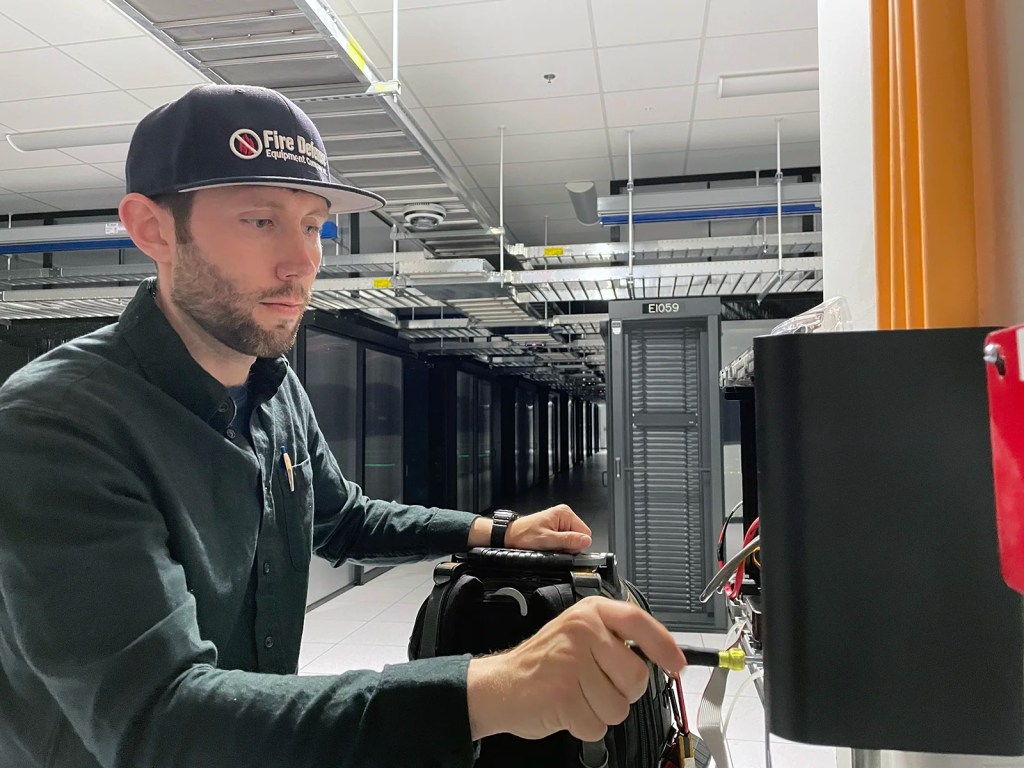
Fire Defense technician performing inspection, testing, and maintenance on a VESDA air sampling smoke detection system in a data center environment.
Questions & Answers
What is transport time and why does it matter?
Transport time is the time required for air from the furthest sampling point to reach the detector. It directly affects detection speed and is a critical design and testing parameter.
What are common failure points in air sampling systems?
Blocked sampling ports, damaged or leaking pipe networks, and airflow imbalances can reduce system sensitivity and delay detection.
What maintenance is required for air sampling systems?
Filters, airflow, and pipe networks must be inspected and maintained to ensure proper system performance.