
Need help with portable fire extinguishers?
Contact Us → Get a Quote →
HANDHELD + WHEELED
Portable Fire Extinguishers
At the incipient stage of a developing fire, a portable fire extinguisher is intended to be quickly carried or wheeled to the hazard location, where its extinguishing agent is discharged to suppress further fire growth.
Unlike fixed fire suppression systems that are designed to operate automatically, fire extinguishers are movable devices that require manual operation.

ABC dry chemical portable fire extinguisher installed by Fire Defense in a recessed wall cabinet, with signage above to maintain clear visibility. 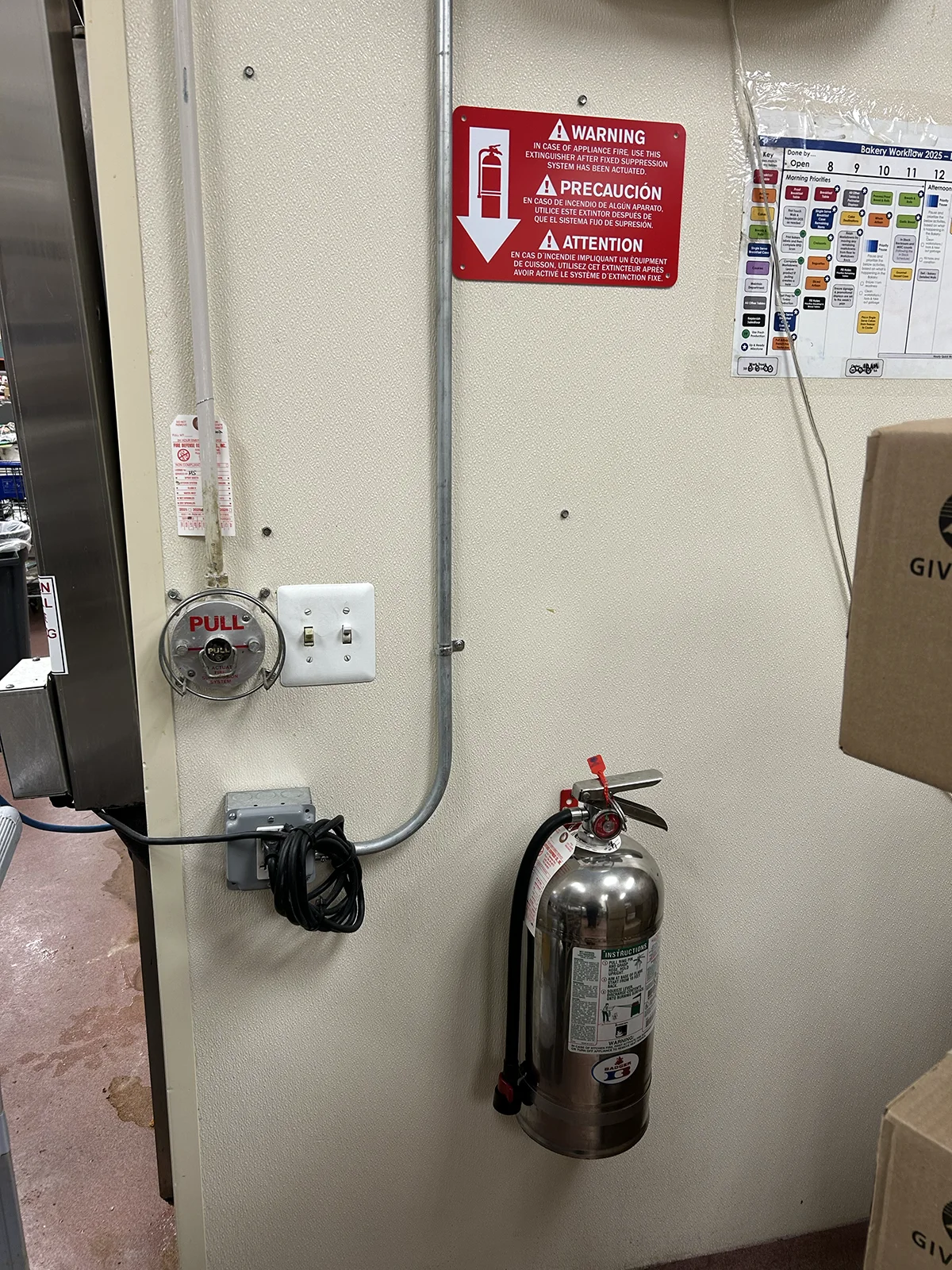
A Class K 6-liter fire extinguisher provides secondary manual backup to the automatic kitchen hood fire suppression system. Inspected and serviced by Fire Defense. 
Wheeled CO₂ portable fire extinguishers recharged and serviced at the Fire Defense extinguisher and cylinder service facility in accordance with NFPA 10 requirements.
The incipient stage represents the earliest phase of a fire before it intensifies into a larger uncontrolled event.
Fire extinguishers are not designed to control fires that have grown beyond this initial stage. Therefore, only a narrow window of time exists in which an extinguisher can effectively suppress a fire.

Water mist portable fire extinguishers installed by Fire Defense in hospital operating and trauma rooms, providing a non-conductive extinguishing agent suitable for sensitive medical equipment and healthcare environments. 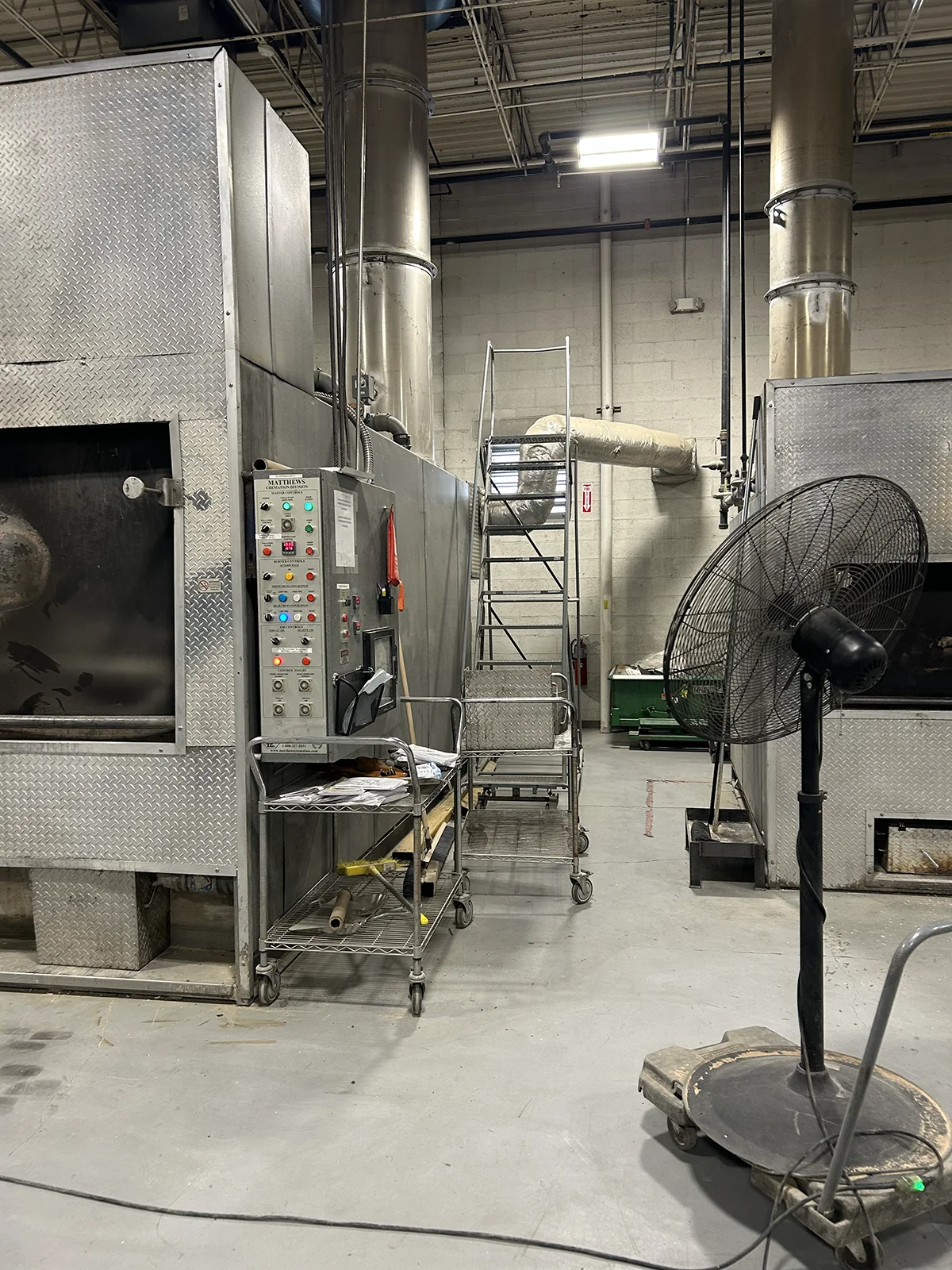
Portable fire extinguishers installed by Fire Defense at a crematory facility, positioned near operating equipment and work areas for visibility and accessibility, with current inspection and service tags documenting maintenance status. 
Handheld portable fire extinguishers containing ABC dry chemical agent installed by Fire Defense on structural columns throughout a newly constructed warehouse and distribution facility.
PORTABLE EXTINGUISHER TYPES
ABC Dry Chemical. Class D. Class K Wet Chemical. Clean Agent. CO₂. Dry Chemical. Foam. Halotron. High Flow. Purple K. Water Mist. Water.
CLASS A FIRES
Ordinary Combustibles. Paper. Wood. Cloth. Rubber. Plastics. Trash.
CLASS B FIRES
Flammable liquids and gases. Petroleum greases. Tars. Oil-based paints. Solvents. Gasoline. Diesel fuel. Kerosene. Lacquers. Alcohols.
CLASS C FIRES
Energized electrical equipment. Appliances. Tools. Circuit breakers. Electrical panels. Wiring.
CLASS D FIRES
Combustible metals. Aluminum. Titanium. Magnesium. Zirconium. Lithium. Calcium. Sodium. Potassium.
CLASS K FIRES
Cooking applications. Cooking oils. Animal fats.
Training + Education
The optimal time to use a fire extinguisher is during the beginning stage of a fire, when it is still small and localized. Because extinguishers contain a limited amount of extinguishing agent, correct operation is critical.
Using the wrong type of extinguisher or improper technique for a specific hazard can result in electrical shock, rapid fire spread, or loss of control. Personnel should be trained in extinguisher use and educated on the limitations and hazards associated with fire response in accordance with OSHA requirements.
Fire Defense provides training and educational programs for companies and individuals focused on the proper use of portable fire extinguishers.
Hands-on instruction and live demonstrations using actual extinguishers, either through controlled live fire scenarios or digital simulation, are available depending on location and customer preference.
Design + Install
Fire Defense provides on-site surveys to evaluate your facility, identify hazards, and establish the correct types, sizes, ratings, and quantities of portable fire extinguishers.
- New and reconditioned portable fire extinguishers
- Fire extinguishers for residential, commercial, and industrial occupancies
- Accessories: cabinets, signs, mounting brackets, and hangers
Extinguishers are installed to ensure clear visibility and easy access based on the building layout, occupancy, and identified hazards. Electronic monitoring devices may also be installed to integrate extinguisher supervision with the building’s Fire Alarm System.
ITM
Fire Defense provides inspection, testing, and maintenance services for portable fire extinguishers in accordance with applicable codes and manufacturer requirements.
- Monthly visual inspections
- Annual maintenance
- Six-year internal maintenance for stored-pressure units
- Twelve-year maintenance
- Recharging of dry chemical, wet chemical, water, and gas-based extinguishing agents
- D.O.T. certified hydrostatic testing
- Over-the-counter extinguisher service, including exchange or same-unit service
- Tagging, documentation, and compliance records
Emergency Service
Fire Defense provides 24/7 emergency response when fire protection systems or equipment require immediate attention. For portable fire extinguishers, this may include emergency replacement, recharge, or post-discharge service following a fire event.
Codes and Standards
Portable fire extinguishers are designed, installed, inspected, tested, and maintained in accordance with applicable national and local codes. Fire Defense performs services in alignment with the requirements of NFPA 10, Standard for Portable Fire Extinguishers.
Additional standards may apply to specific hazards, occupancies, or specialized extinguisher types where required.
Note: NFPA makes its codes and standards available online for free. Select View Free Access under Current & Prior Editions and create a free account.

Fire Defense installed these portable fire extinguishers protected with weather-resistant covers in a storage facility to reduce environmental exposure while maintaining visibility and accessibility. 
Fire Defense completed inspection of multiple 10 lb ABC dry chemical portable fire extinguishers, staged and ready for reinstallation or delivery.
For a portable fire extinguisher to reliably suppress an incipient fire, several critical factors must be addressed.
Selection: correct type, size, and quantity of extinguisher(s) for the specific fire hazards, occupancy group, and location conditions present.
Installation: mounted in designated and readily accessible locations in accordance with mounting height, travel distance, and visibility requirements.
Maintenance: fully charged, inspected, and serviced at intervals established by codes, standards, and manufacturer procedures so it remains operationally ready.
Operation: personnel trained and educated in proper extinguisher use.
Questions & Answers
When should a portable fire extinguisher be replaced instead of serviced?
Extinguishers should be replaced if they are non-rechargeable, fail inspection or hydrostatic testing, show signs of damage or corrosion, or no longer meet the required hazard classification or rating.