
Need help with spray booth fire protection?
FIRE SUPPRESSION SYSTEMS
Spray Booth
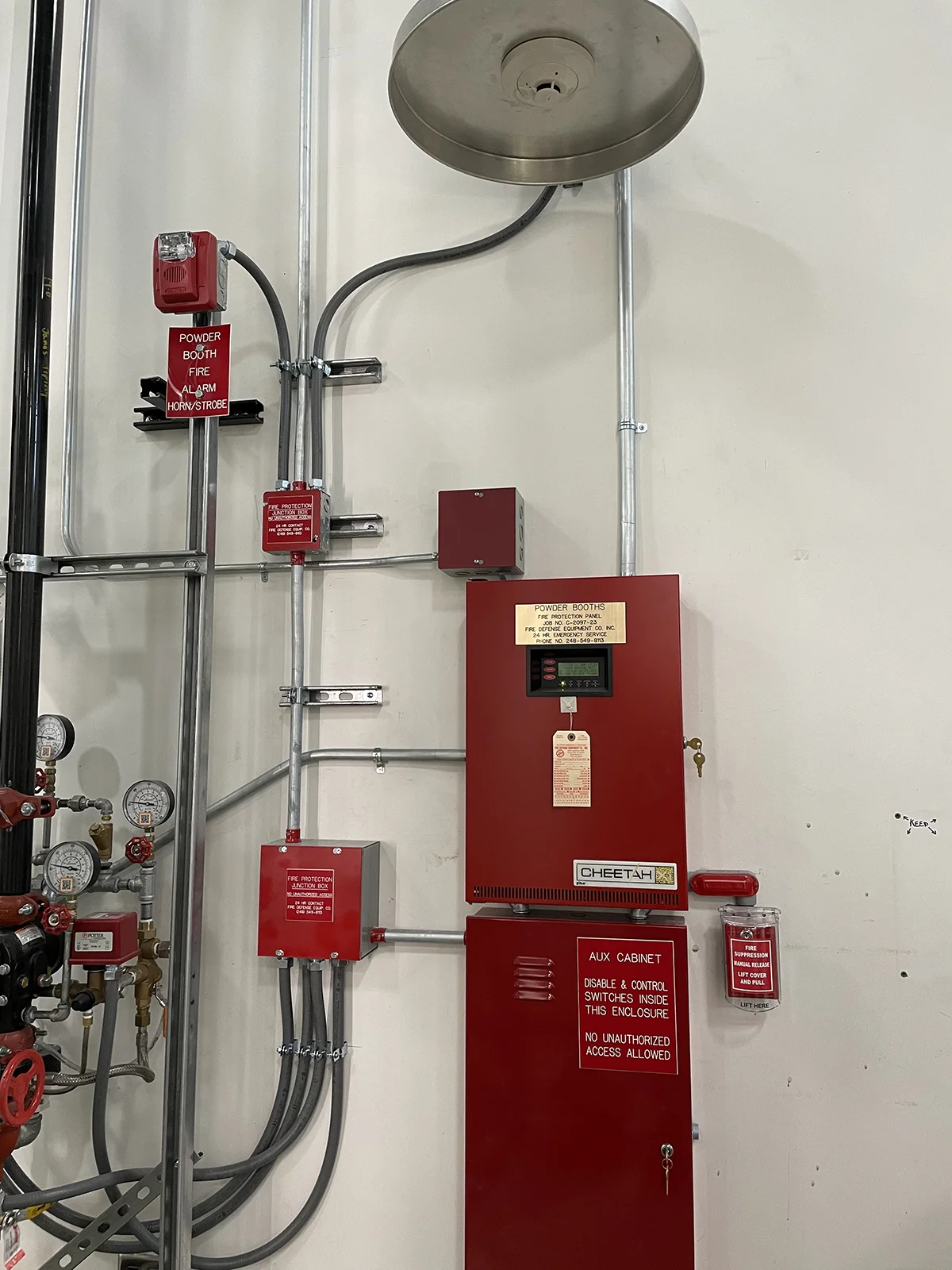
Spray booth operations generate flammable vapors and overspray that can accumulate and may involve electrically charged processes or elevated temperatures.
Fire protection systems are designed to detect fire conditions and suppress them at the source while shutting down the process that created the hazard.


Dry chemical fire suppression systems are commonly used to protect manual spray booths and associated exhaust systems, with system interlocks that stop spraying operations and airflow during a fire event.
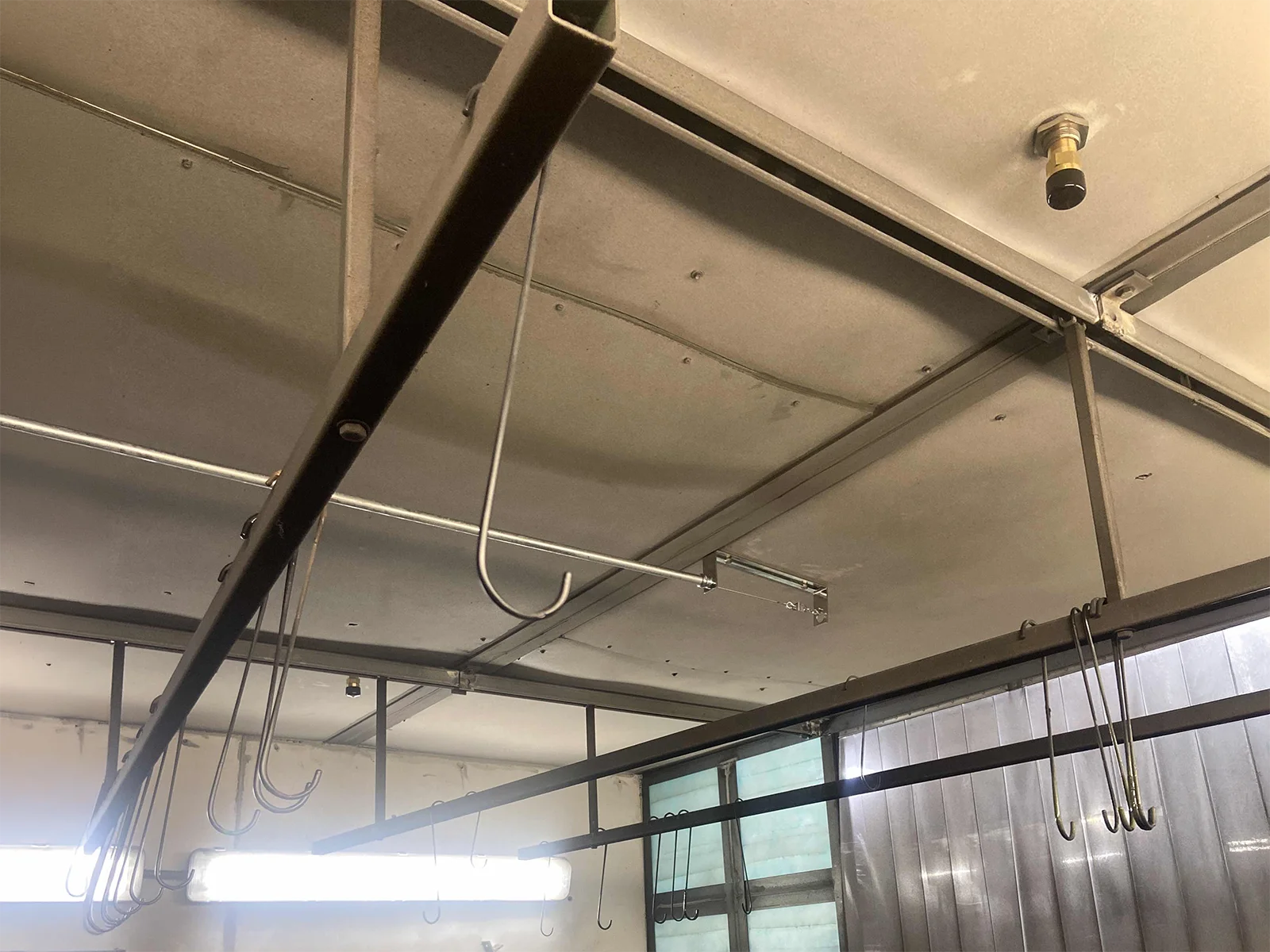
Heat detection linkage and dry chemical fire suppression discharge nozzle installed inside an industrial paint booth. 
Mechanical heat detection linkage and dry chemical fire suppression nozzle installed for an industrial paint booth suppression system. 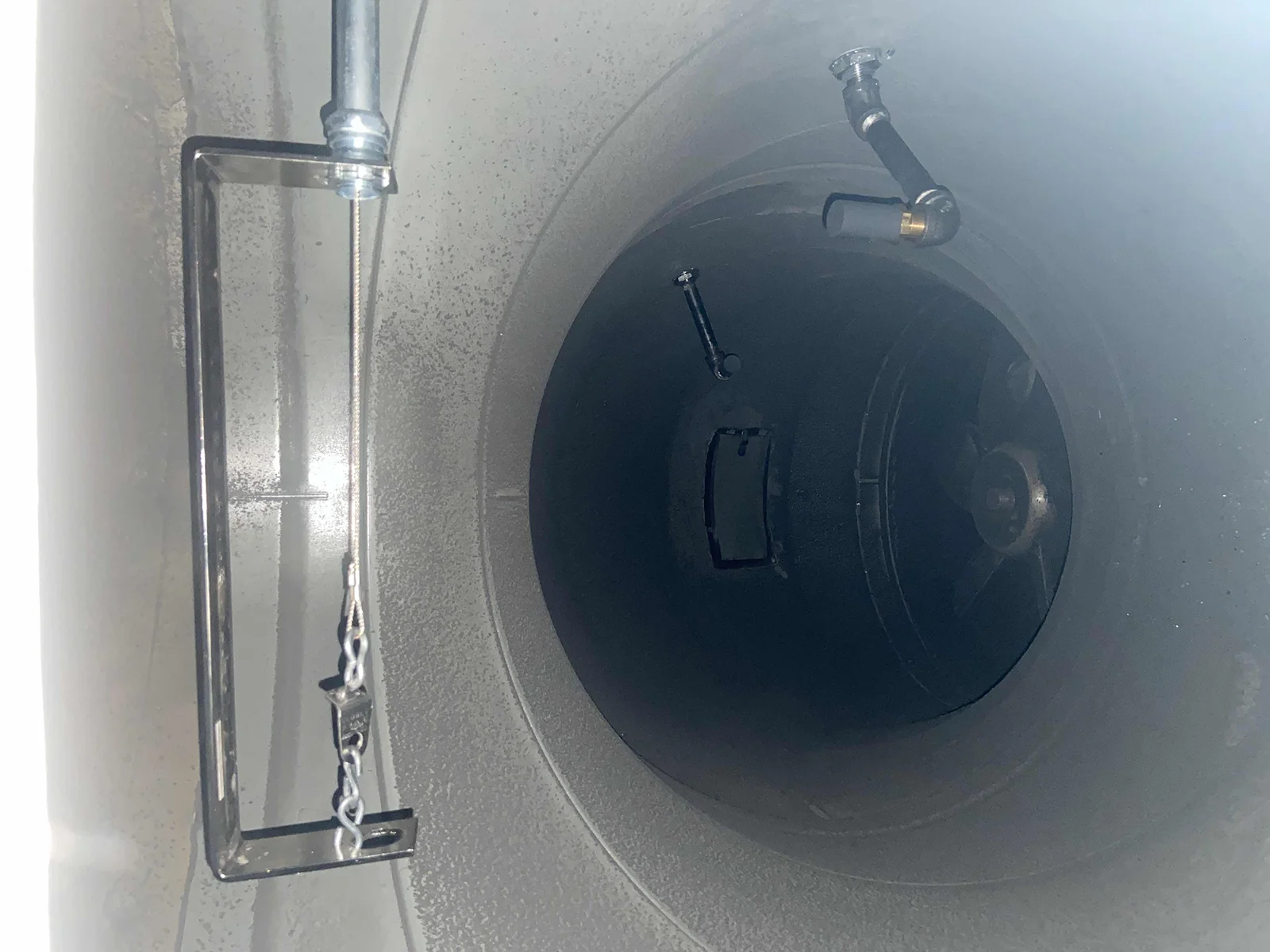
Plenum and exhaust fire detection with dry chemical fire suppression nozzle installed inside an industrial paint booth exhaust system. 
Manual pull station installed for an industrial paint booth dry chemical fire suppression system. 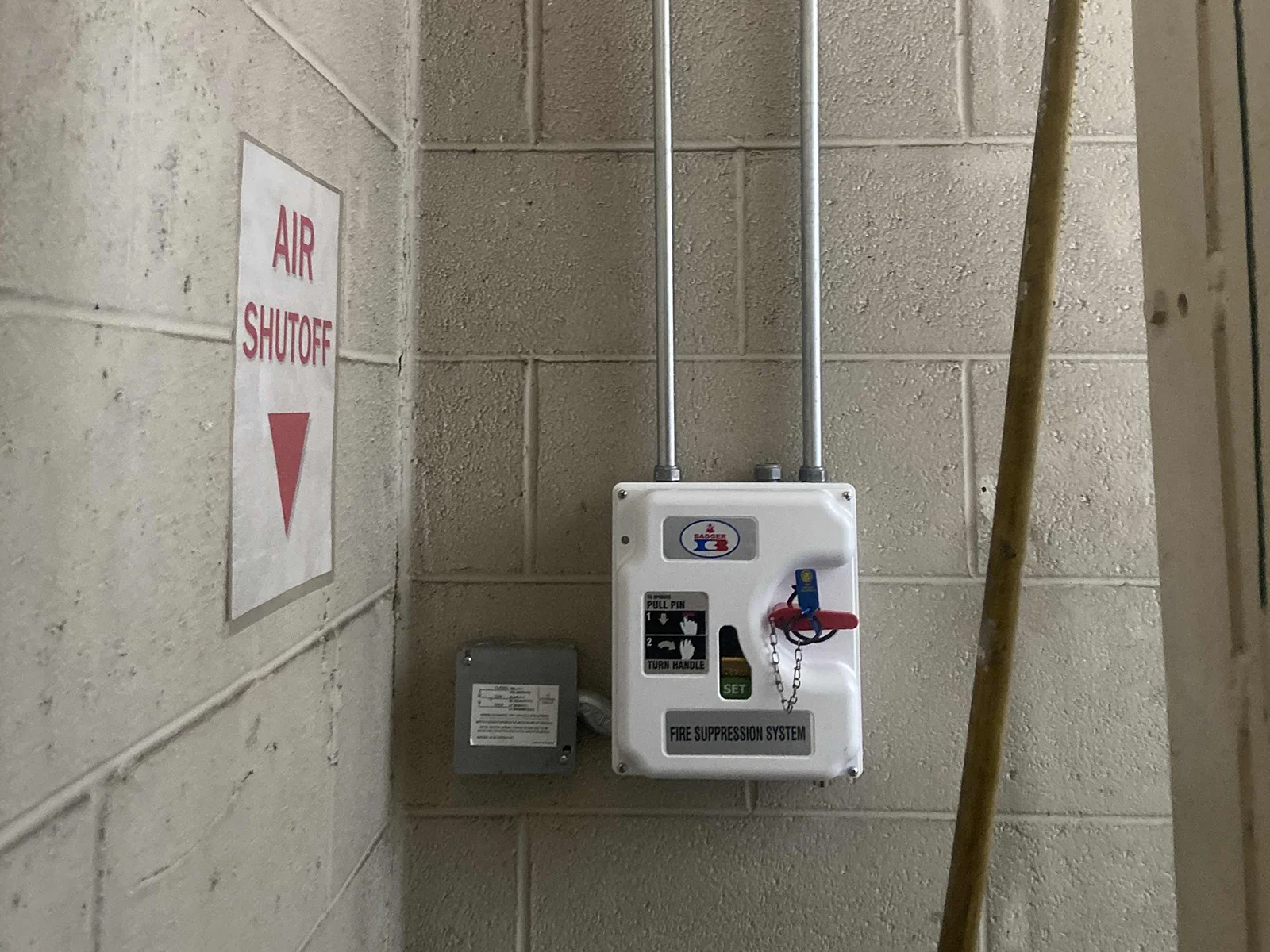
Dry chemical fire suppression system control head and air shutoff assembly for an industrial paint booth.
Higher-hazard operations, such as automated or robotic coating lines, may require protection from clean agent systems or deluge systems.

Fike optical flame detectors installed by Fire Defense inside an automated powder spray enclosure. 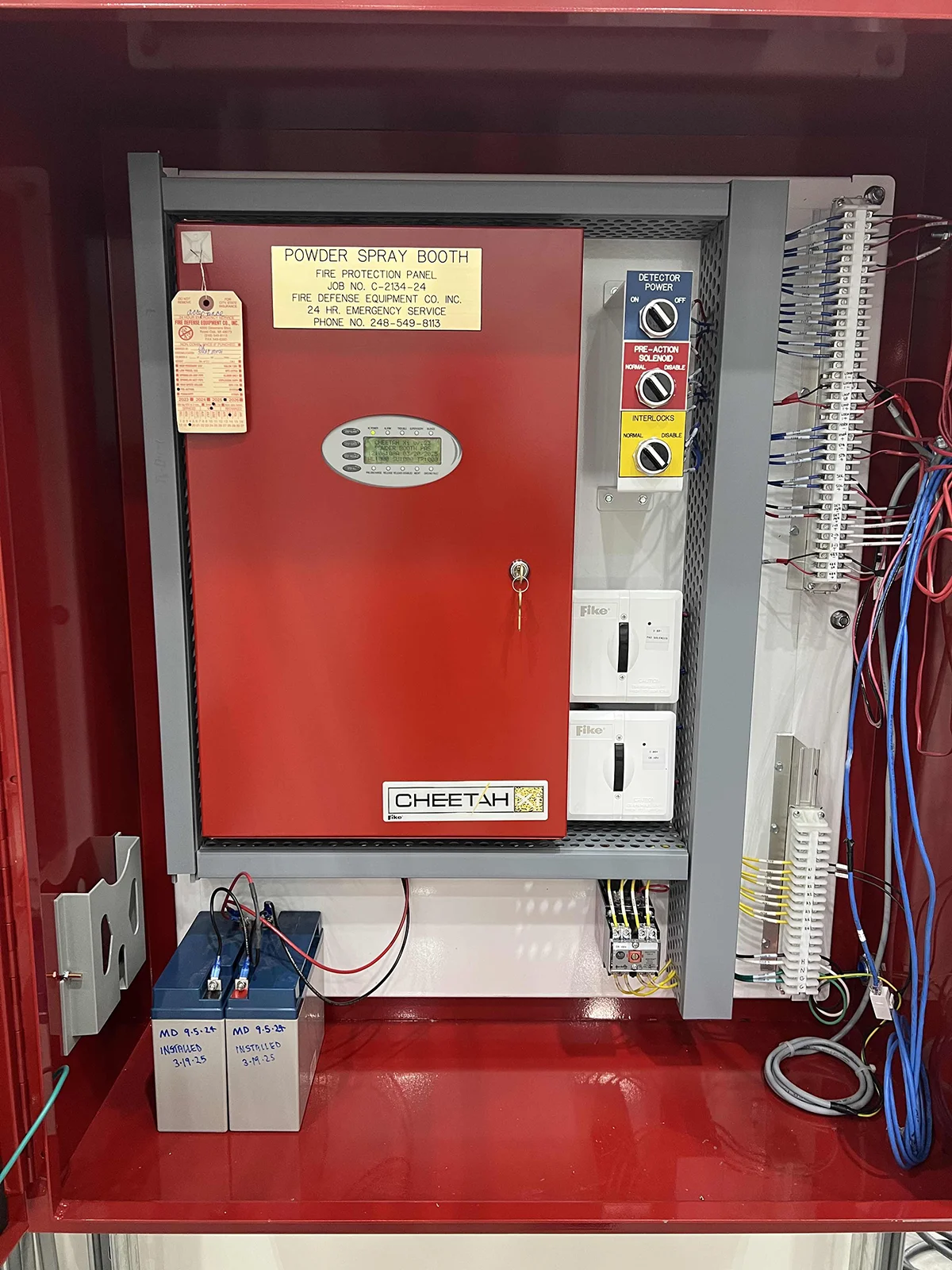
Fire Defense installed this Fike fire suppression system to protect an automated powder spray enclosure. 
Fire Defense installed this Fike fire suppression system to protect an automated powder spray enclosure.
PROTECTED AREAS
Spray Booth Enclosures. Spray Zones. Automated and Robotic Coating Lines. Conveyorized Finishing Lines. Curing Ovens. Exhaust Ducts. Plenums. Filters. Exhaust Fans. Paint Mixing Rooms. Paint Storage Areas. Solvent Storage Areas.
Design + Install
Fire Defense provides design and installation for fire protection systems used in spray booth operations, including manual and automated coating processes.
- Dry chemical, clean agent, and deluge fire suppression system installation
- Detection and interlock integration for booth shutdown and ventilation control
- Protection of spray booth enclosures, filters, and exhaust ductwork
- System design for automated and robotic coating operations
ITM
Fire Defense performs inspection, testing, and maintenance for spray booth systems.
- Semi-annual inspections and testing
- Nozzle alignment, condition, and coverage verification
- Detection and interlock function testing
- Inspection of booth, filter, and duct protection components
- Airflow shutdown verification during system activation
- Documentation and deficiency reporting
Emergency Service
24/7 emergency service is available for spray booth fire protection systems.
- Response to system activation and shutdown events
- Troubleshooting of detection and interlock systems
- System restoration and component replacement
Codes and Standards
Fire Defense performs services in accordance with NFPA standards, applicable codes and AHJ requirements.
Note: NFPA makes its codes and standards available online for free. Select View Free Access under Current & Prior Editions and create a free account.
Visit NFPA 17: Dry Chemical Extinguishing Systems →
Visit NFPA 33: Spray Application Using Flammable or Combustible Materials →

Questions & Answers
What are the most common failure points in spray booth protection systems?
Blocked or misaligned nozzles, buildup on detection devices, and failure of interlocks or shutdown functions are common issues that can reduce system effectiveness.
How do automated or robotic coating lines change protection requirements?
Automated systems can introduce continuous fuel sources and complex movement, requiring coordinated detection, suppression, and interlocks to ensure hazards are controlled across the entire process