
Need help with emergency lighting?
Contact Us → Get a Quote →
EGRESS LIGHTING
Emergency Lights + Exit Signs
Emergency lighting and exit signs provide illumination and direction within a building to support safe evacuation during power loss or emergency conditions.
Often referred to as E-lights, these systems maintain visibility of exit paths, doors, and travel routes when normal lighting is unavailable.
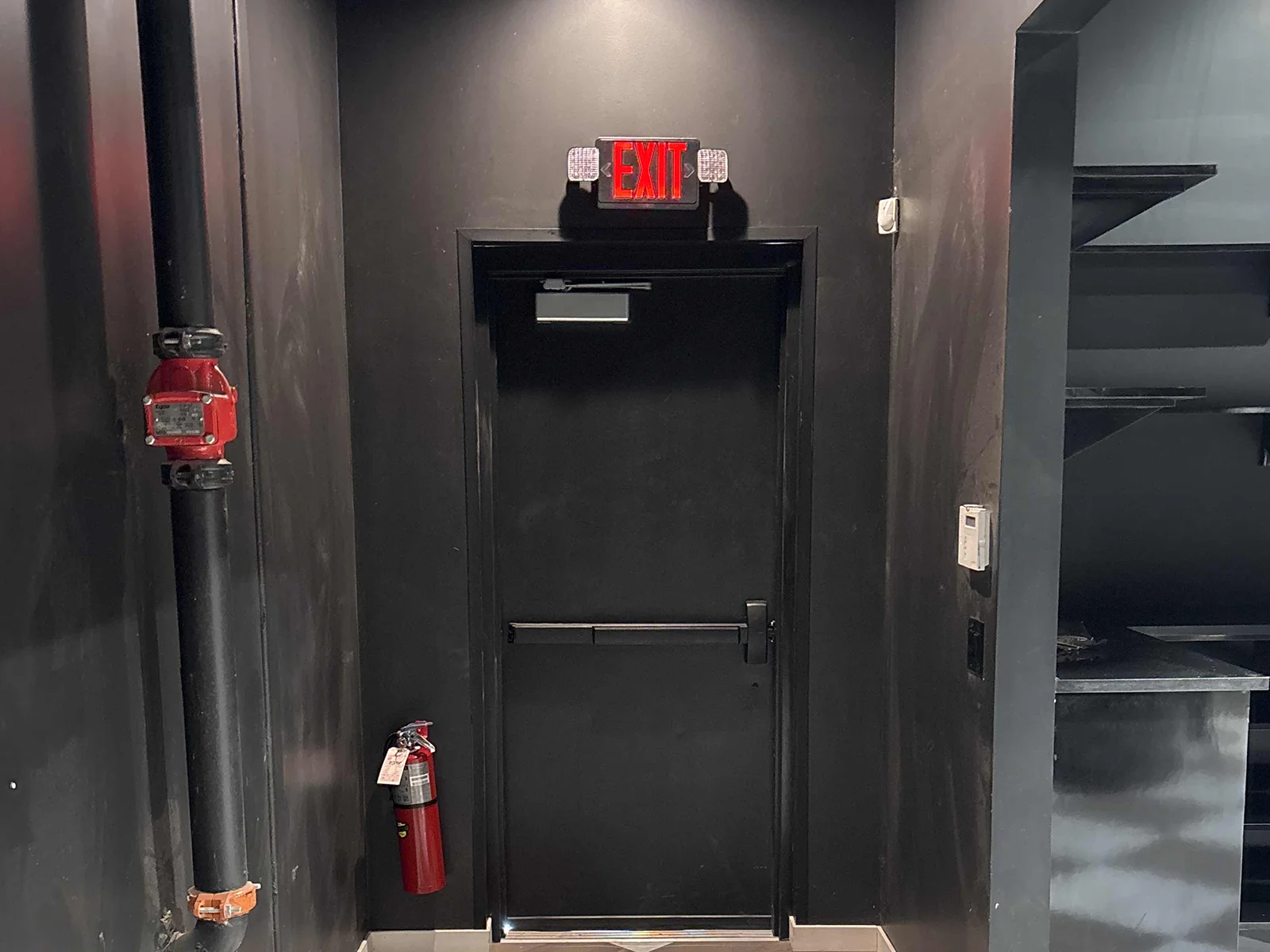
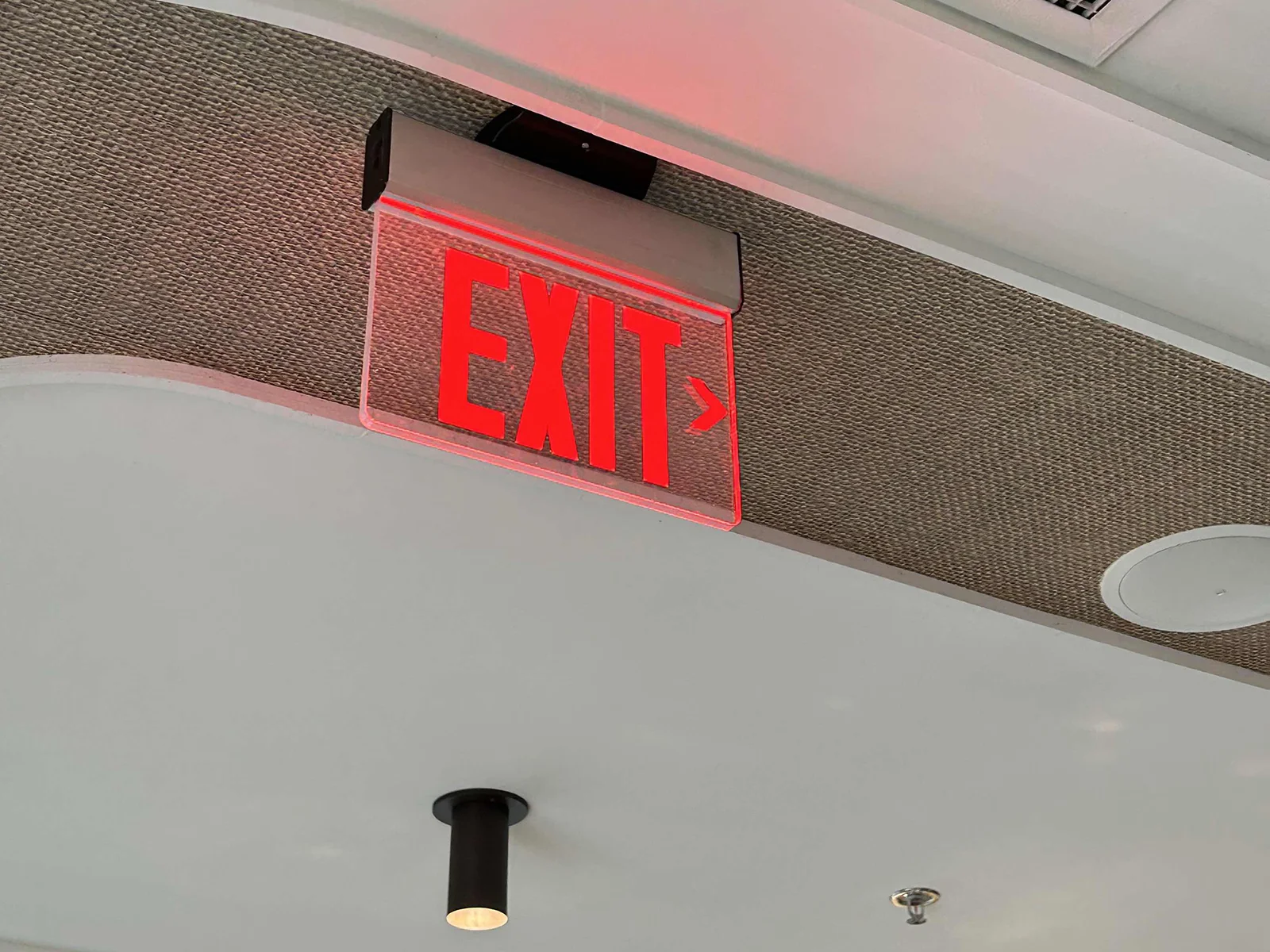
Emergency lights activate upon loss of power to illuminate egress pathways, while exit signs continuously identify exit locations and remain visible under normal and emergency conditions.
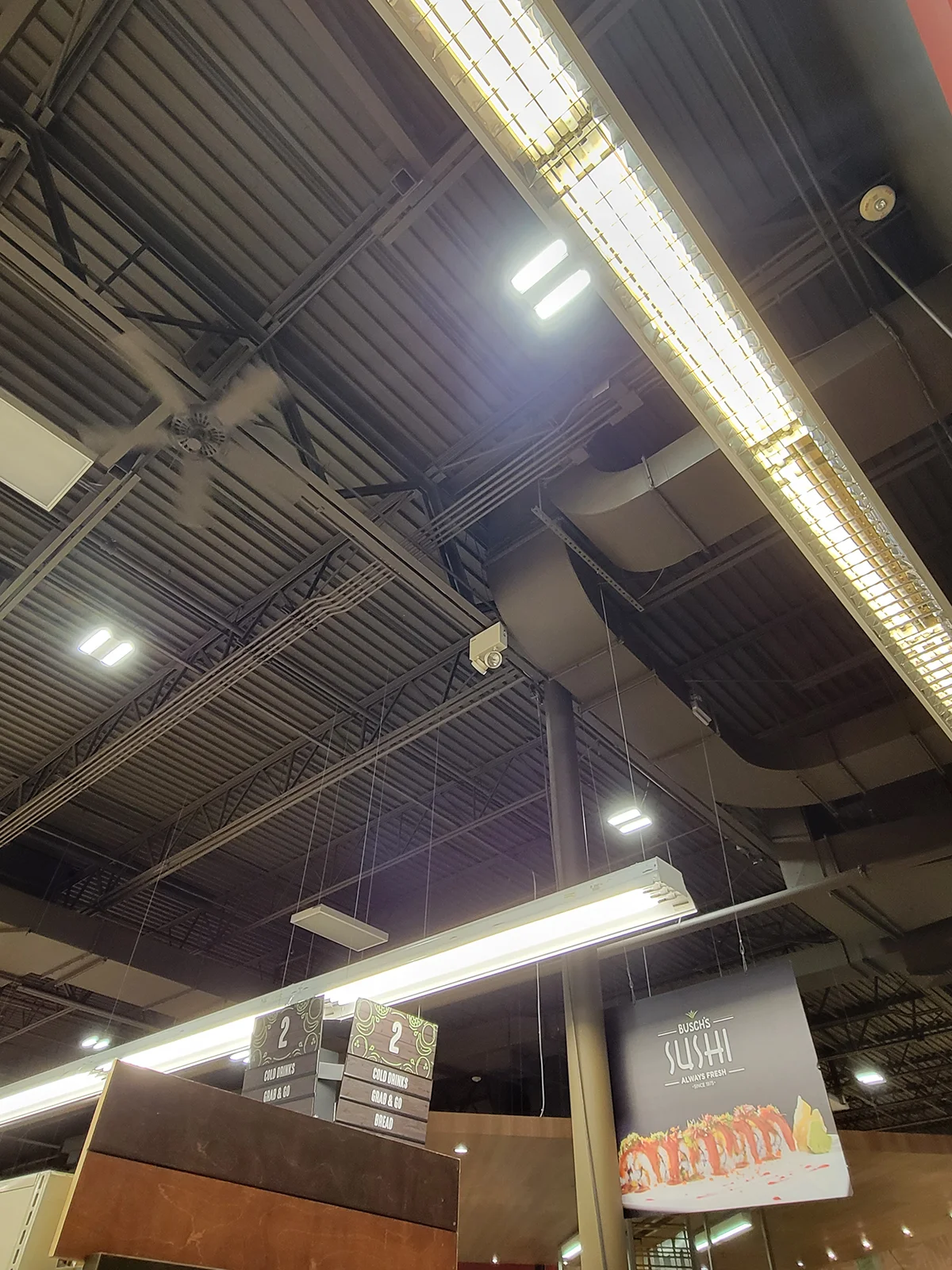

PROTECTED AREAS
Corridors. Exit access. Exit discharge. Exit enclosures. Stairways. Walkways.
SYSTEM COMPONENTS
Battery backup units. Central inverters. Combination units. Emergency luminaires. Exit signs. Remote heads.
Design + Install
Fire Defense provides layout review, fixture selection, and installation for emergency lighting and exit signs, with placement based on required illumination levels and exit path coverage.
Integration with fire alarm systems for monitoring and supervisory fault notification.
ITM
Fire Defense performs inspection, testing, and maintenance for emergency lights and exit signs to verify operation, battery performance, and illumination duration.
- Monthly 30-second functional testing
- Annual 90-minute duration test
- Battery condition and voltage verification
- Lamp and LED operation verification
- Charger and transfer switch testing
- Exit sign illumination and visibility inspection
- Fixture condition and alignment inspection
- Replacement of failed components
- Documentation and reporting
Emergency Service
24/7 emergency service is available for emergency lights and exit signs. Fire Defense supports urgent repairs, fixture replacement, and restoration of emergency lighting coverage when failures occur.
Codes and Standards
Fire Defense performs emergency lighting and exit sign services in accordance with NFPA 101, NFPA 70, and other applicable building and life safety codes, manufacturer requirements, and AHJ requirements.
Note: NFPA makes its codes and standards available online for free. Select View Free Access under Current & Prior Editions and create a free account.
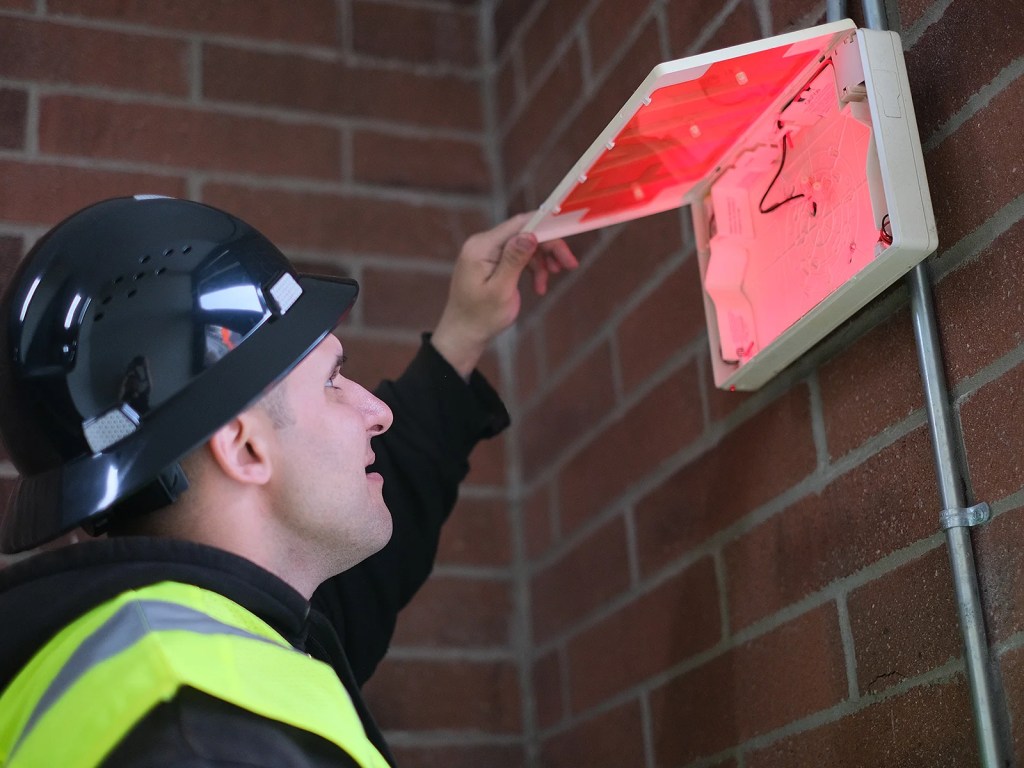
Fire Defense technician inspecting and testing an emergency lighting unit.
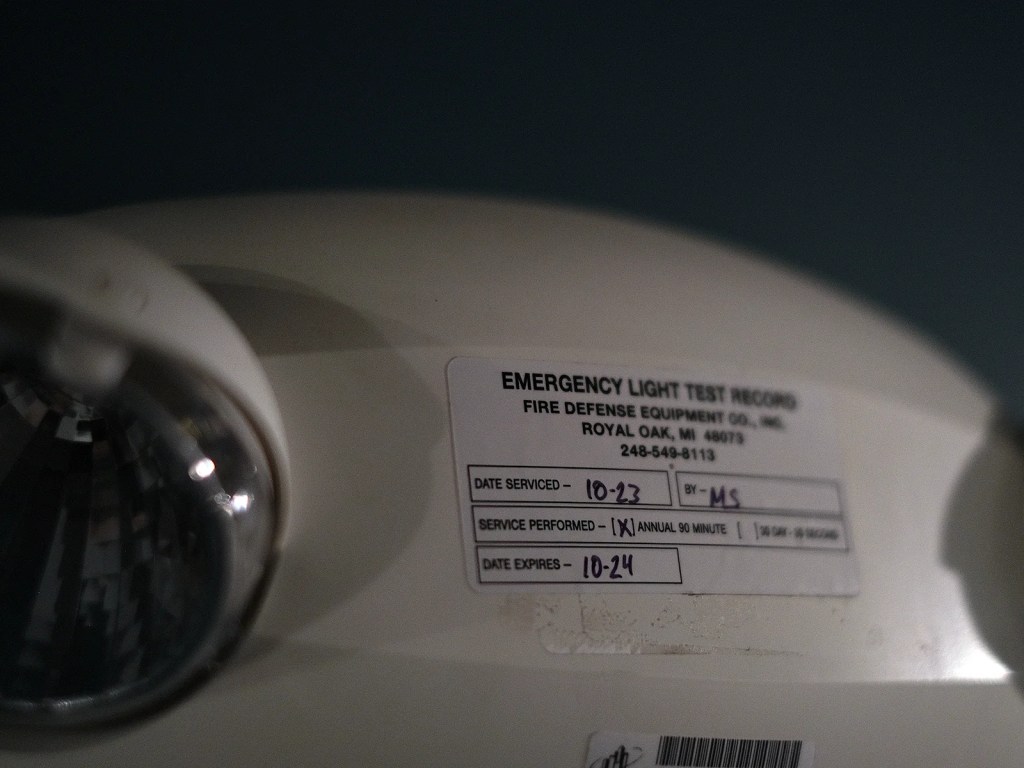
Emergency light test record label documenting annual 90-minute testing performed by Fire Defense.
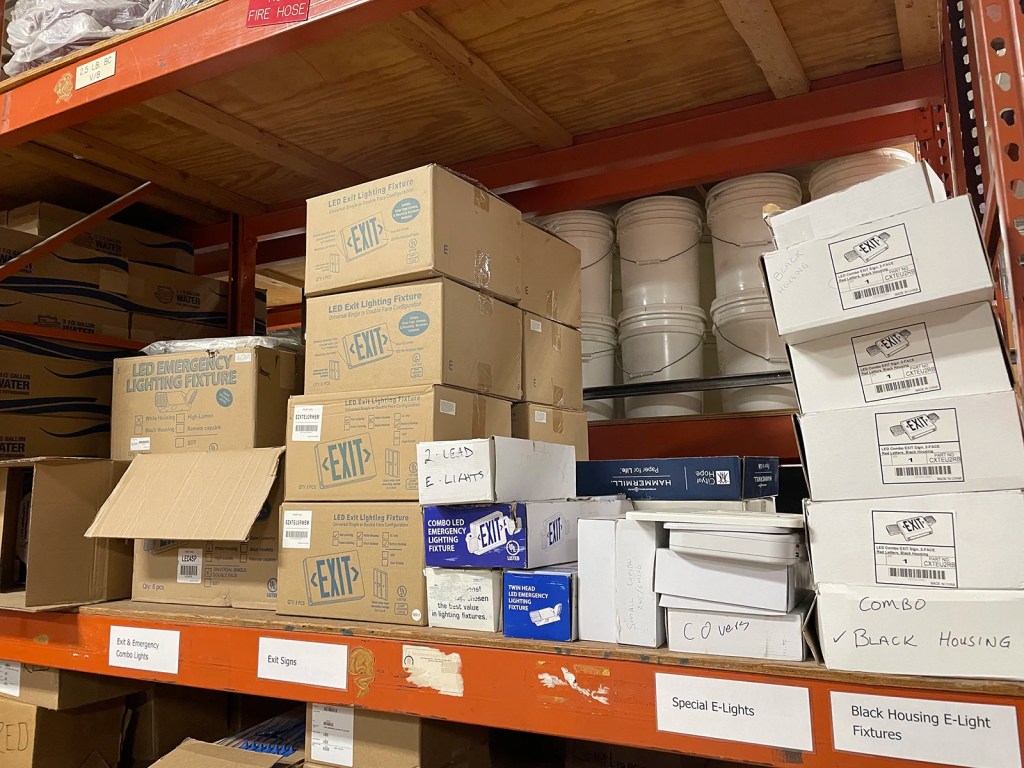
Spare exit signs, emergency lights, and combination emergency lighting fixtures stocked by Fire Defense.
Questions & Answers
Do exit signs need to be illuminated at all times?
Yes, exit signs are required to remain visible under normal and emergency conditions.
How often must emergency lights be tested?
Monthly functional tests and annual duration tests are commonly required.
Can emergency lighting be powered by a generator?
Yes, systems may use batteries, generators, or central inverter systems depending on the design.
What areas require emergency lighting?
Exit paths, stairways, corridors, and exit discharge areas are typical locations.
Why do batteries fail even if lights look normal?
Battery capacity degrades over time, which is why regular testing is required.
What causes emergency lighting systems to fail during an outage?
Battery degradation, charger failure, and lack of routine testing are the most common reasons emergency lighting systems do not operate for the required duration.