
Need healthcare facility fire protection?
Contact Us → Get a Quote →
FIRE PROTECTION
Healthcare Facilities
Healthcare facilities depend on fire protection and life safety systems that protect occupants during an emergency while minimizing disruption so patient care can continue.
The primary building system for coordinating life safety is the fire alarm system. Fire alarm systems detect emergency conditions, initiate voice evacuation messages to notify occupants (allowing trained staff to relocate patients to fire-rated compartments or protected zones), and communicate with a supervising station or on-site monitoring center to alert the fire department.
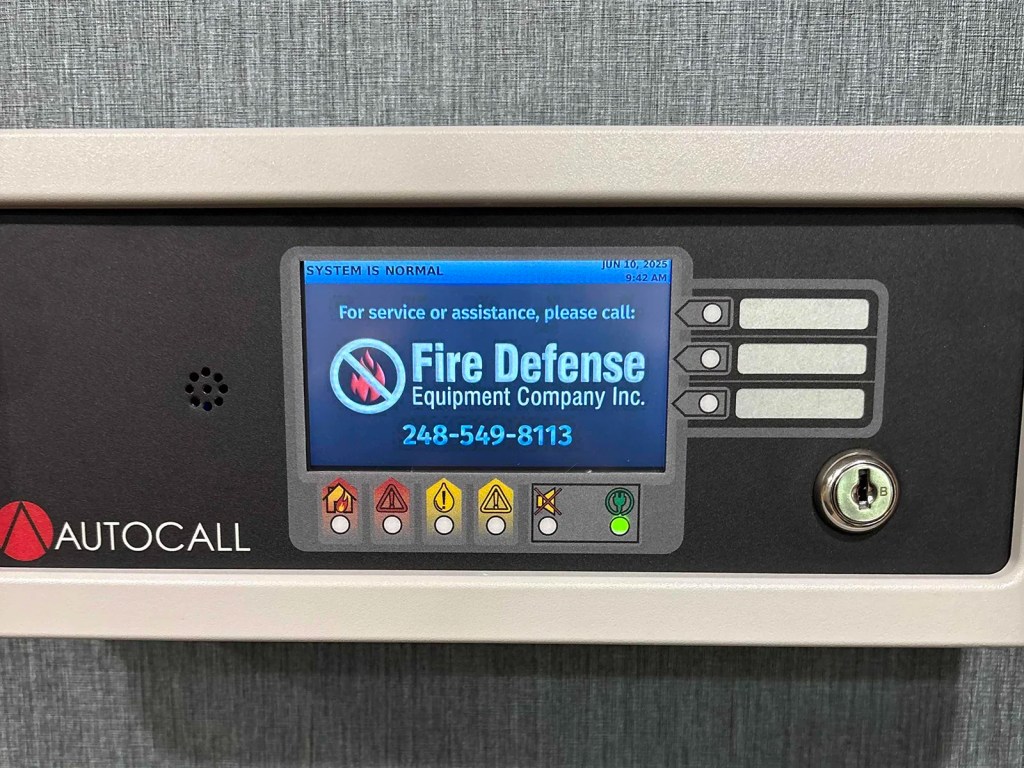
Remote fire alarm annunciator panel installed by Fire Defense for system monitoring and control in a healthcare facility.

Fire phone communication system tested by Fire Defense during an annual fire alarm inspection in a healthcare facility.
Fully addressable fire alarm systems identify the exact location of alarm or trouble conditions, allowing staff to quickly locate and respond. Self-testing notification devices support inspection and testing without disrupting patients or clinical operations.

Fully addressable fire alarm notification appliances configured for healthcare facility fire alarm systems by Fire Defense.
Integrated fire alarm systems interface with multiple building systems, including monitoring and controlling smoke control systems, releasing fire doors where applicable, monitoring fire sprinkler systems for waterflow, supervisory, and trouble conditions, and interfacing with special hazard suppression systems and kitchen hood fire suppression systems, which further protect occupants, critical equipment, and facility infrastructure.

Fire Defense testing waterflow supervisory signals integrated between the fire sprinkler system and fire alarm system during annual inspection.
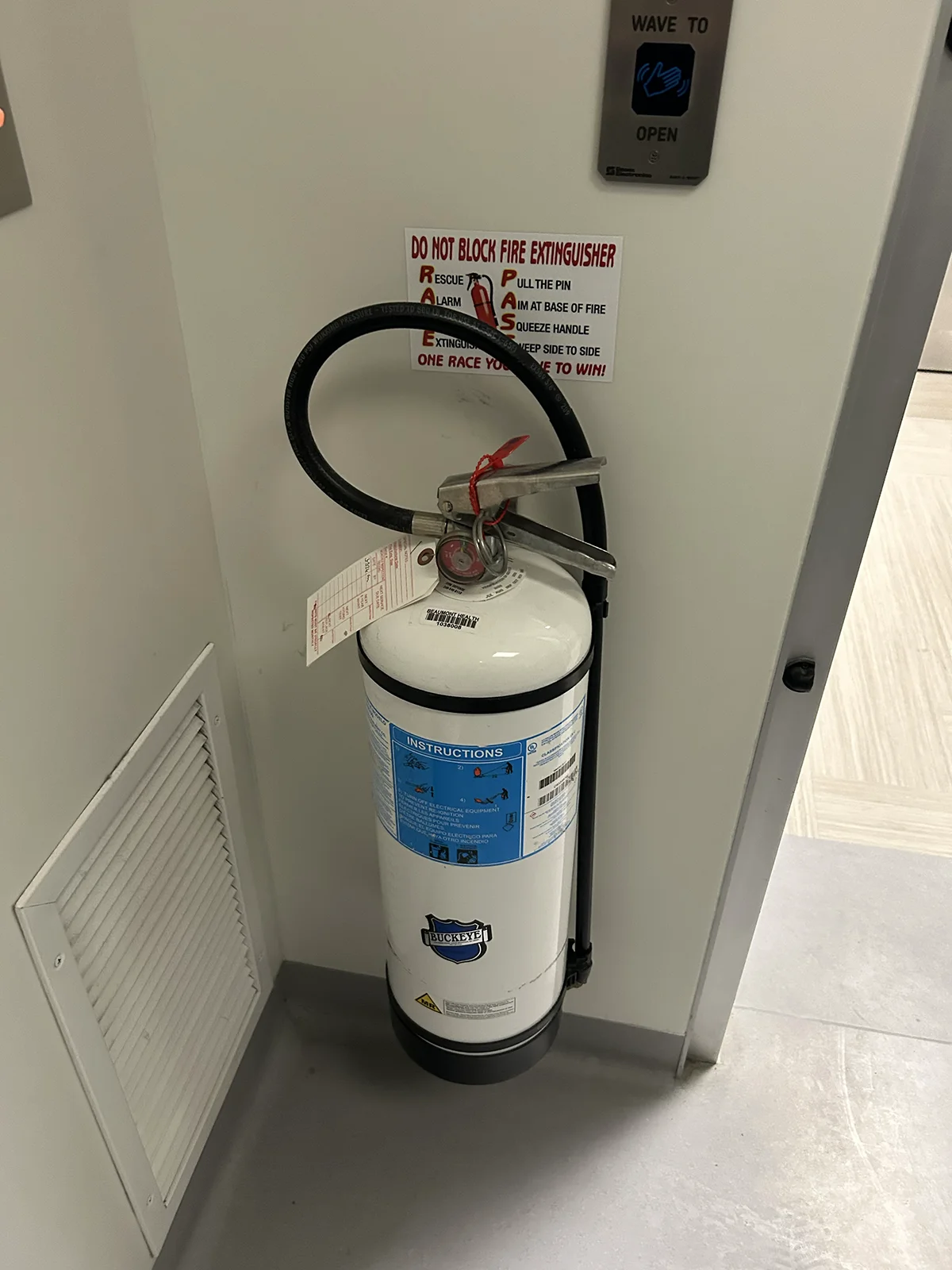
Additional fire protection and life safety measures include portable fire extinguishers for controlling incipient-stage fires and emergency lighting for safe egress.
PROTECTED AREAS
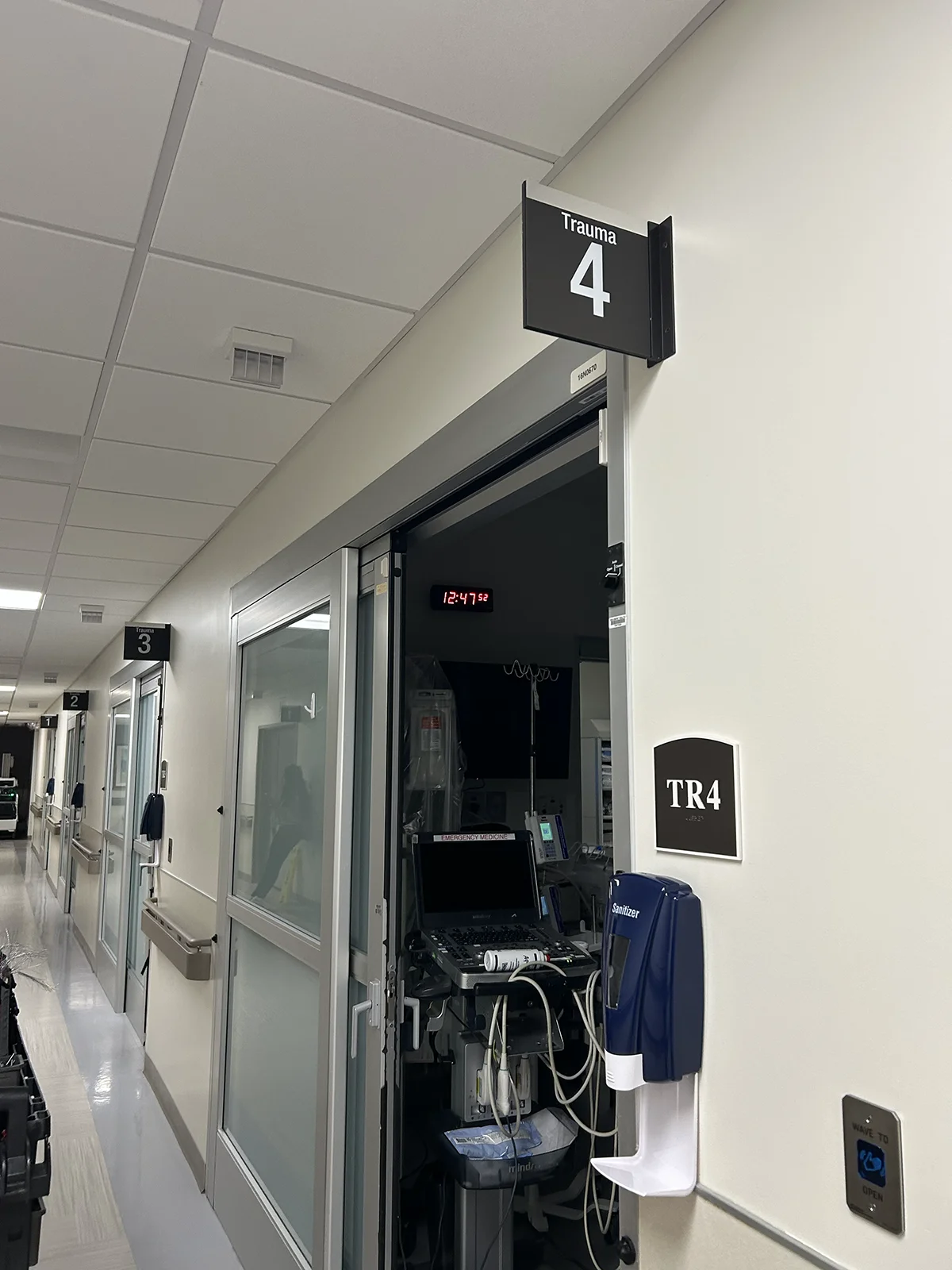
Patient Rooms. Operating Rooms. Intensive Care Units. Emergency Departments. Laboratories. Imaging Suites. Pharmacies. Research Laboratories and Animal Research Facilities. Data and Communication Rooms. Mechanical Rooms. Electrical Rooms. Central Utility Plants. Elevators. Corridors. Food Service Areas. Laundry Facilities. Storage Areas. Loading Docks. Helipads. Outpatient Clinics. Ambulatory Care Centers. Medical Office Buildings. Surgical Centers.
Design + Install
Fire Defense provides design and installation for fire protection systems in healthcare facilities where life safety, system integration, and continuity of care are critical.
- Fully addressable fire alarm systems with self-testing notification
- Voice evacuation sequencing for phased relocation
- Monitoring and control of smoke control systems, fire doors, and stair pressurization
- Fire sprinkler monitoring (waterflow and supervisory)
- Coordination with kitchen hood and clean agent systems
- Zoning and sequence-of-operations for defend-in-place
ITM
Fire Defense performs inspection, testing, and maintenance for healthcare facility fire protection systems to maintain system readiness and support ongoing operations.
- Annual fire alarm system testing
- Inspection of fire sprinkler systems (valves, waterflow, supervisory)
- Smoke detection testing in units and common areas
- Verification of monitoring and communication to supervising stations
- Documentation and deficiency reporting
Emergency Service
24/7 emergency service is available for healthcare facility fire protection systems requiring immediate response.
- Response and troubleshooting for alarm, trouble, and supervisory conditions
- System restoration and temporary protection measures
- Replacement of detection devices, notification appliances, and control components
Codes and Standards
Fire Defense performs services in accordance with NFPA 72, NFPA 99, NFPA 101, and other applicable codes, manufacturer requirements, and AHJ requirements.
Note: NFPA makes its codes and standards available online for free. Select View Free Access under Current & Prior Editions and create a free account.
Visit NFPA 72: National Fire Alarm and Signaling Code →
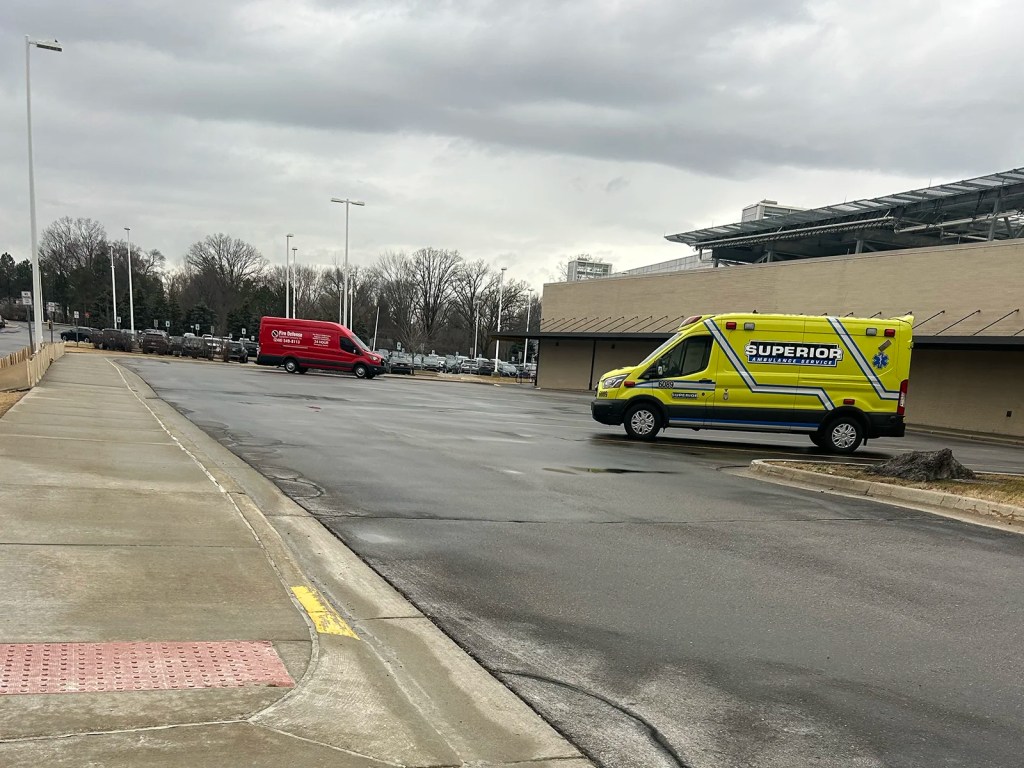
Fire Defense technician providing scheduled or emergency service at healthcare facility.
Questions & Answers
What is defend-in-place and when is it used?
Defend-in-place is used when patients cannot be easily evacuated. Instead of leaving the building, occupants are relocated to adjacent fire-rated compartments while systems control fire and smoke.
How do self-testing notification devices work?
During a test, each device uses built-in sensors to verify that the strobe light output and audible signal are actually produced at the device, not just that a signal was sent from the control panel. The device then communicates the results back to the fire alarm control panel, allowing performance to be confirmed and documented with minimal disruption to occupants.
What is the basis for detector selection in varying healthcare environments?
Detector selection is based on occupancy use, environmental conditions, airflow, ceiling configuration, and response objectives, ensuring reliable operation without excessive nuisance alarms.