
Need help with Fire Suppression Systems?
Contact Us → Get a Quote →
FIRE SUPPRESSION SYSTEMS
Foam
Foam fire suppression systems discharge a blanket of foam over flammable liquid hazards, restricting oxygen and cooling the fuel surface.
While fluorinated foam agents have been widely used for their fire suppression performance, they contain PFAS and are subject to environmental regulation and restrictions.
Fluorine-free foam agents are available for certain applications and may be used where permitted and appropriate for the hazard.
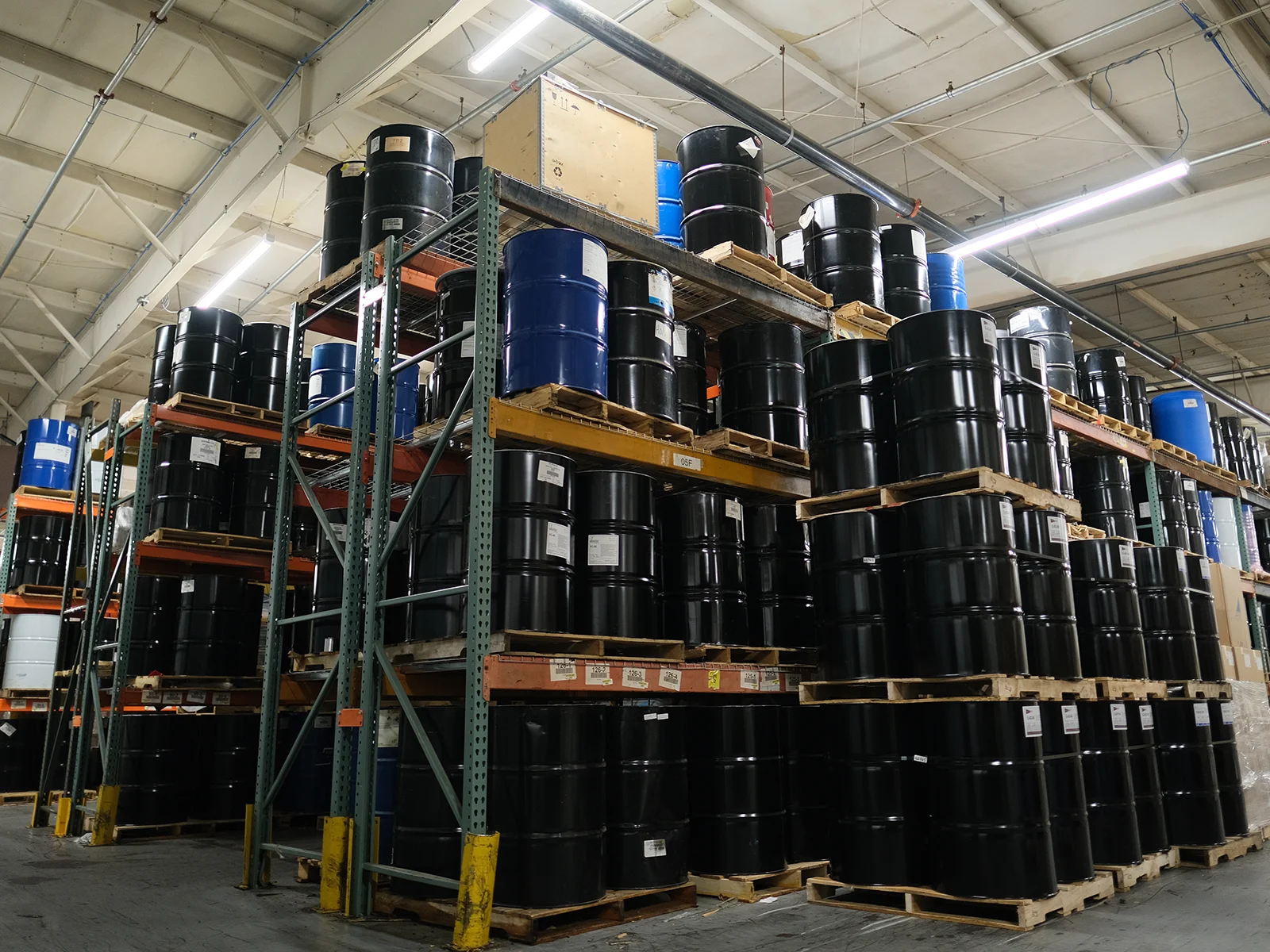
Fire Defense performing an inspection on a foam fire suppression system protecting a large flammable liquid storage area, with stacked barrels covered by overhead foam discharge nozzles designed to apply foam across the hazard. 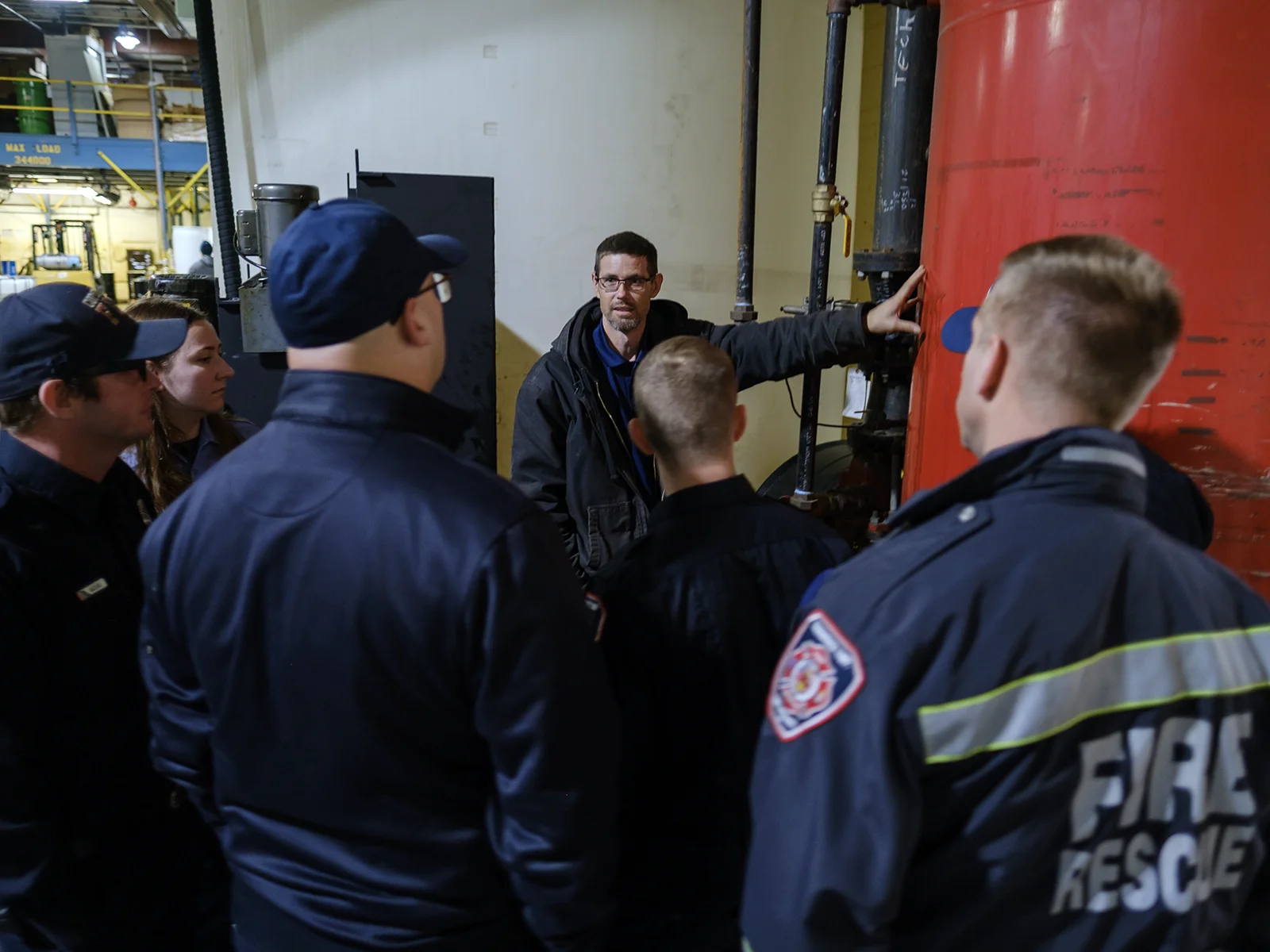
Fire Defense team member conducting a training session with a local fire department on multiple foam fire suppression systems in a large facility. 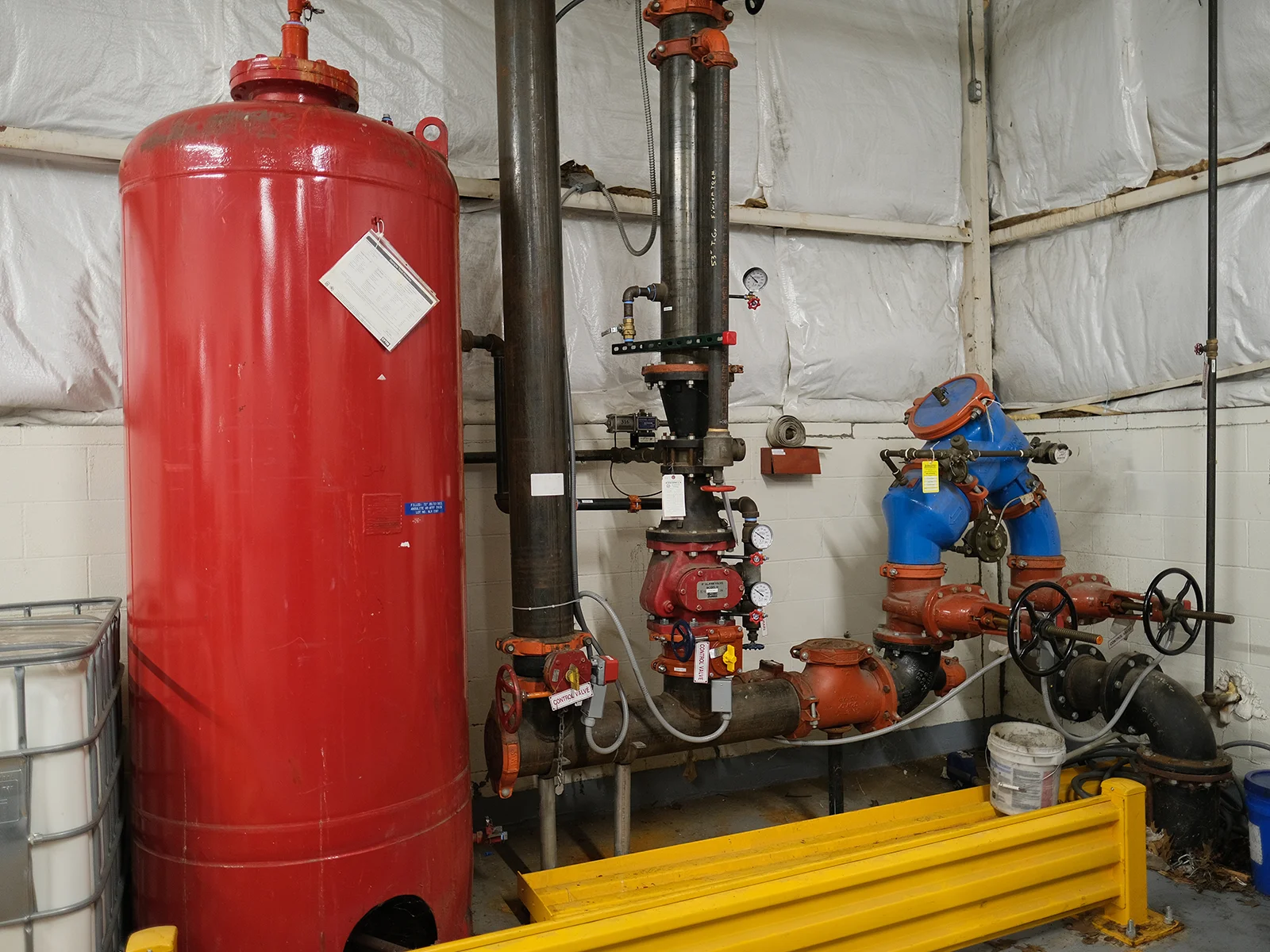
Fire Defense performing inspection and service on a foam fire suppression system, including foam bladder tank access, agent replacement, proportioner and valve inspection, system testing, and return to normal operation.
FOAM APPLICATIONS
Aircraft hangars. Aviation facilities. Bulk storage. Chemical plants. Fuel storage. Helidecks. Loading racks. Marine facilities. Mining. Oil and gas refineries. Offshore platforms. Petrochemical facilities. Power generation facilities. Process areas. Tank farms. Waste treatment plants. Warehousing.
FOAM AGENT TYPES
Class A foam. Class B foam. AFFF. AR-AFFF. Fluoroprotein. Film-forming fluoroprotein. Low expansion. Medium expansion. High expansion. Alcohol-resistant. Fluorine-free foams.
Design + Install
Fire Defense provides design and installation for foam fire suppression systems used on flammable liquid hazards.
- Foam system type selection (low, medium, high expansion)
- Proportioning system design and concentrate selection
- Discharge device layout and coverage design
- System interface with detection and control systems
ITM
Fire Defense performs inspection, testing, and maintenance for foam fire suppression systems.
- Annual inspection of system components
- Foam concentrate analysis
- Foam proportioning accuracy verification
- Foam bladder tank inspection and testing
- Documentation and reporting
Emergency Service
24/7 emergency service is available for foam fire suppression systems, including concentrate replacement and system repair.
Codes and Standards
Fire Defense performs services in accordance with NFPA 11 and applicable codes, manufacturer requirements, and AHJ requirements.
Note: NFPA makes its codes and standards available online for free. Select View Free Access under Current & Prior Editions and create a free account.

Fire Defense inspecting a foam fire suppression system with a vertical bladder tank containing fluorine-free foam concentrate protecting a flammable liquid tank farm. 
Fire Defense inspecting manual actuation and abort station for a foam fire suppression system protecting a flammable liquid tank farm. 
Fire Defense inspecting multiple water-powered oscillating foam monitors and nozzles used to protect a flammable liquid tank farm. 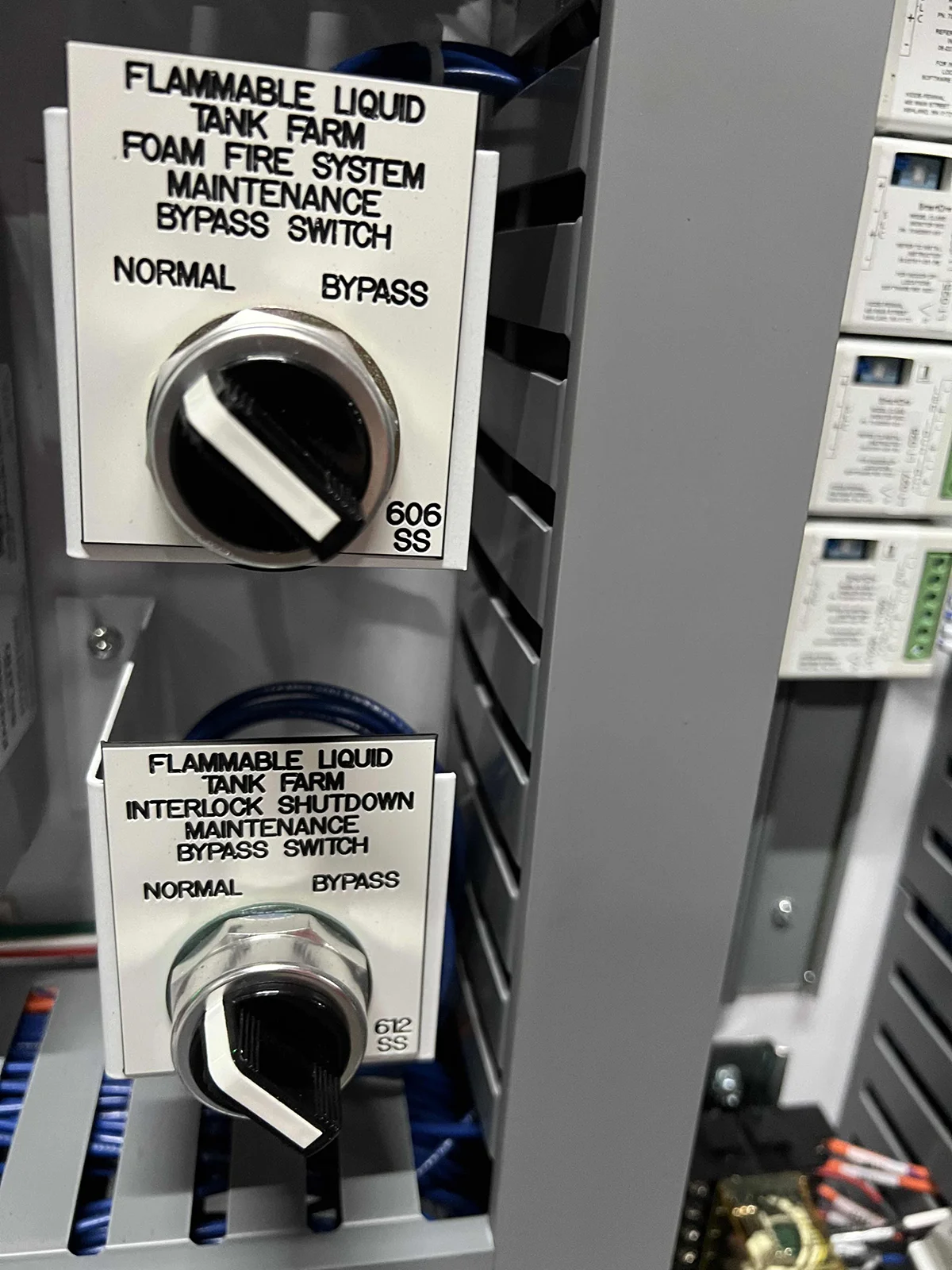
Fire Defense using control panel maintenance switches to function test a foam fire suppression system, including optical flame detection devices, alarm signaling, and system interlocks.
Questions & Answers
What are the most common failure points in foam systems?
Incorrect proportioning, degraded or contaminated foam concentrate, and blocked or improperly configured discharge devices can prevent effective foam application.
Why is foam proportioning critical to system performance?
Foam systems must deliver a precise mixture of water and concentrate to form an effective blanket. Improper proportioning can result in insufficient foam quality and reduced fire control.
How do environmental regulations impact foam system selection?
Certain foam concentrates contain PFAS and are subject to environmental restrictions. System design and maintenance must consider current regulations and approved agent types.
How do I remove my existing PFAS foam system?
With removal of PFAS critical environmental regulations must tightly followed. Disposal of exiting tanks and pipe are often required.